The Devil’s Checkmate
“The Devil’s Checkmate” is a tightly wound military thriller chapter. It traces Lieutenant Blaze Montgomery from the adrenaline of a lethal raid to the quieter devastation of its aftermath. By doing so, it reveals that the enemy may not have delivered the true checkmate.
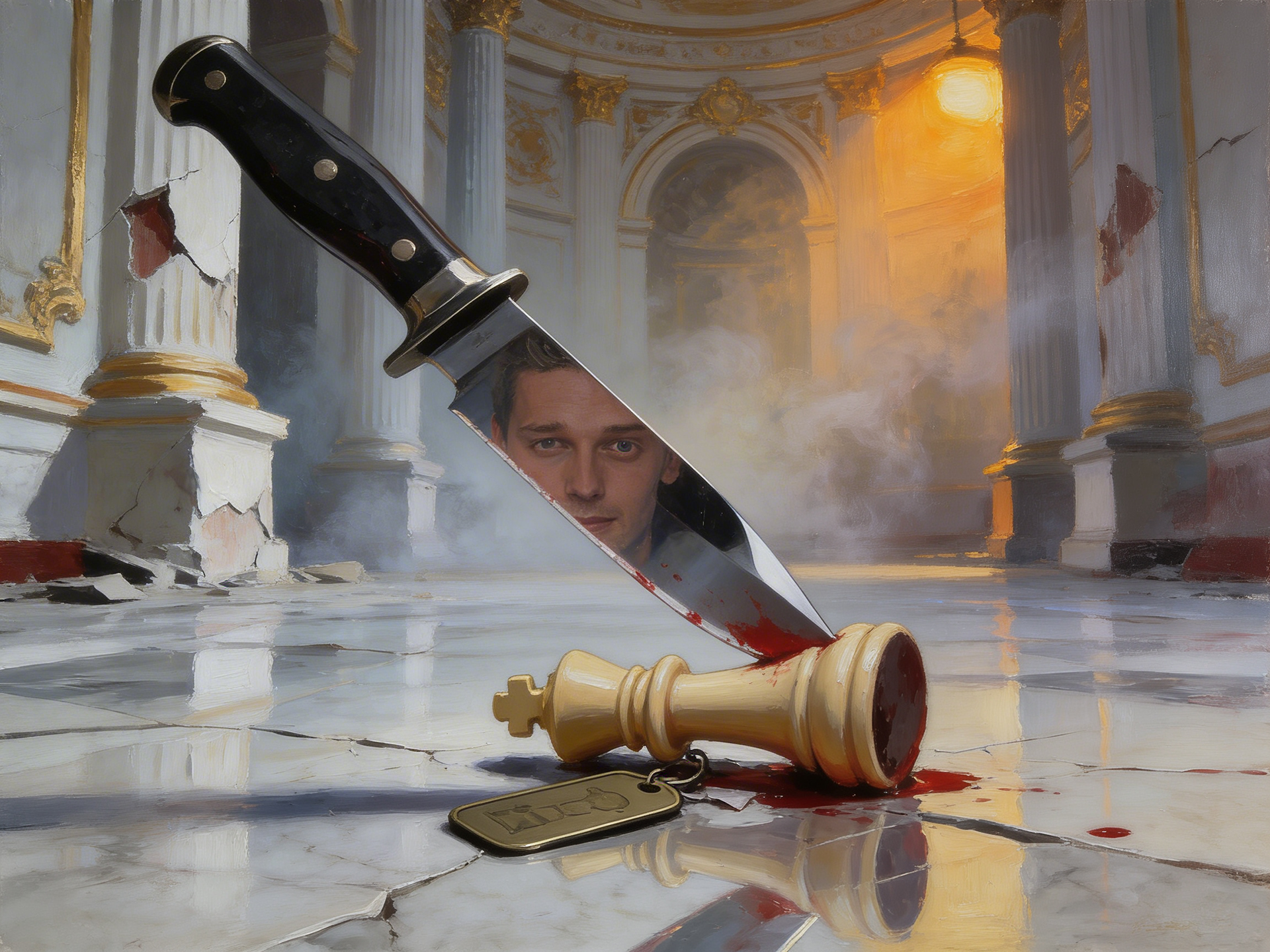
The chapter opens in the heart of enemy territory as Blaze storms the compound of Colonel Popov Ivanov, a cold Russian tactician feared as “the Butcher.” Their confrontation dominates the chapter’s first half: a cat-and-mouse standoff in an ornate hall where Blaze suffers a shattered knee yet survives through improvised tactics — hurling dirt at Ivanov’s eyes, calling in a wall demolition to break his opponent’s rhythm — before delivering a fatal knife strike. “Checkmate,” he says, and the title’s chess conceit clicks into focus: Ivanov’s strategic genius was also his fatal flaw, his inability to deviate from a pattern. Blaze wins not by out-thinking him but by refusing to be predictable.
Victory, however, arrives bracketed by loss. Outside the compound, Blaze finds his team in ruins — multiple casualties, and his closest subordinate, Ramsey, critically wounded, cyanotic, and fading. Medic Sergeant Maya Singh works frantically to stabilize both Ramsey and Blaze, whose knee requires immediate attention, but he stubbornly delays it. Their relationship occupies a careful middle ground between professional respect and something more tender: her hands on his wound, his fingers briefly intertwined with hers, a silence between them that carries more weight than dialogue. Singh’s role expands from combat medic to emotional anchor, and she fills it with wiry competence.
The extraction through a snow-covered forest offers the chapter’s most lyrical passage — a surreal juxtaposition of tactical silence and natural beauty (snowdrops pushing through frost, a woodpecker triggering Blaze’s combat reflexes) — before the team reaches the helicopter. In the medevac, Blaze’s physical and psychological damage begins to surface: mission details are dissolving from memory, faces and building layouts fragmenting under the pressure of trauma.
The chapter’s final act shifts to a German military hospital, where Dr. Bradley inflicts a second wound that no Kevlar can stop: Blaze’s father has advanced liver cancer, and doctors have given him perhaps six months without aggressive treatment. Visiting his dying father is impossible for the man who just killed one of the world’s most dangerous operatives, as he cannot get clearance. The scene exposes the central irony of the soldier-hero archetype: maximum agency in the field, helplessness at home. Singh reappears, now in scrubs, trading tactical authority for bedside manner, and closes the chapter with a warrior’s unvarnished comfort: You’ll heal. Then we’ll be back out there.